This blast of autumn colour comes from the uppers falls of Tahquamenon Falls, within a state park of the same name in Michigan, USA. The cascade has the nickname ‘Root Beer Falls’ due to the reddish-brown tint the water often takes. Cedar swamps upstream put a high concentration of tannins in the water, which causes the discolouration. And when autumn turns the leaves on the banks orange and crimson, the waterfall blends in nicely with the colour scheme.
I am singer, I like singing Rabindra song, i can do painting , guitar, piano, cooking, write love poem, cooking recipe etc.
Thursday, March 11, 2021
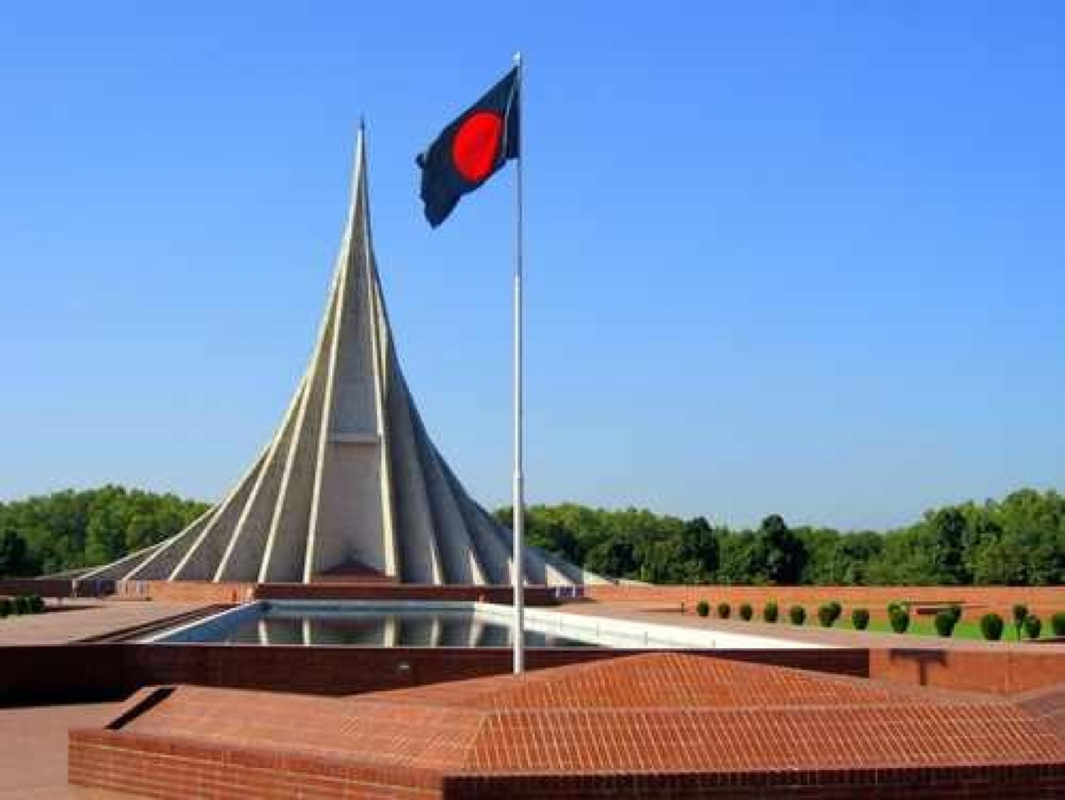
Nation set to pay homage to language martyrs
The nation is set to observe the ‘Shaheed Dibash’ (Language Martyrs
Day) and the International Mother Language Day on Friday with extensive
programmes.
People from all walks of life will pay glowing tributes to the memories of language movement martyrs, the valiant sons of the soil who made supreme sacrifices to establish the rights of the mother tongue, Bangla, in 1952.
The day will also be observed around the world as the UNESCO recognised the 21 February as the International Mother Language Day on November 17, 1999.
The government has already taken extensive programmes to observe the ‘Shaheed Dibash’ and the International Mother Language Day on February 21 in a befitting manner.
The day is a public holiday.
In observance of the day in a befitting manner, the Central Shaheed Minar premises is being decorated with paintings, graffiti, buntings and selected verses on the mother language.
Four-tier security will be enforced around the main altar of the Shaheed Minar, its adjoining areas and Azimpur graveyard of the language martyrs.
President Abdul Hamid and Prime Minister Sheikh Hasina will lead the nation by paying homage to the Language Movement heroes by placing wreaths at the Central Shaheed Minar at one minute past zero hours.
The President and the Prime Minister issued separate messages on the eve of the day, paying glowing tributes to the martyrs of the historic Language Movement of 1952.
Different political-social-cultural-professional organisations will arrange various programmes, including seminars and cultural functions, to observe the Amar (immortal) Ekushey and International Mother Language Day in a befitting manner.
Quran Khwani and offering Fateha will be held at Azimpur graveyard in the city while prayers will be arranged at all worship places across the country seeking salvation of the departed souls of the martyrs of the Language Movement.
The programmes include placing of wreaths at the central Shaheed Minar at one-minute past zero hours (Thursday midnight), hoisting at half-mast the national and party flags at its offices across the country and Bangabandhu Bhaban and hoisting black flags in the morning, wearing black badges and placing wreaths on the graves of martyrs at Azimpur graveyard with Provat Feri as a mark of respect to the Language Movement martyrs.
In observance of the day, ruling Awami League would take a two-day programme.
The party will organise a discussion at Bangabandhu International Conference Centre in the city at 3 pm on February 22.
Awami League President and Prime Minister Sheikh Hasina is expected to chair the discussion.
Like previous years, Dhaka University (DU) authorities will organise the programmes at the Central Shaheed Minar in coordination with other relevant agencies.
National dailies will publish special supplements marking the day and Bangladesh Betar and Bangladesh Television and private radio stations and television channels will air special programmes on the occasion.
On February 21 in 1952, Salam, Rafique, Shafique, Jabbar and Barkat embraced martyrdom in police firing in front of the Dhaka Medical College and Hospital (DMCH) as they took to the street to intensify the campaign to establish Bangla as the state language of the then Pakistan, sowing the seeds of subsequent movements for the country’s independence.
They were killed as police opened fire on students, demonstrating under the All-Party Students Action Committee against conspiracies of Pakistani rulers to declare “Urdu” as the only state language.
The movement for Bangla, however, did not stop and Pakistan government on February 29, 1956 was compelled to recognise Bangla as one of the state languages besides Urdu.
The decision, however, could not stop the movement against repression and misrule of Pakistani government and subsequently led to the War of Independence and ultimately the emergence of Bangladesh.
Tuesday, March 9, 2021
Sunday, March 7, 2021
About US
Birth-15 February (3rd Falgun)
Father- Mohammed Fazle Ali khan
Brother- Five brother, two sister
First brother –Major Shawkat Ali Khan now ritier and AZAX Jute mill MD.
Second brother-Anower Ali khan work garments business
Third brother-Mustafizur Rahman khan, he is police I. G.P (Inspacter genarel of police)
Fourth brother-Amanullah Khan, he is business man
Younger brother- Ahsanullah Khan he is American university P.S.D
My elder sister she is work London, his husband is counciler and then retair.
My husband Abdul Hameed Chowdhury, he is awami lege general secretary and then Qatar ambassador in Bangladesh.
Former Ambassadors
| ||||||||||||||||||||||||||||||||||||||||||||||||||||||||||||||||||||
My four daughter, elder daughter Asma Chowdhury
Jhangirnager
university professor. His husband Dr. liaqat Ali Diabeties Hospital
professor. His one daughter and one son. Daughter Dramatic graduate. Son
Nibir read Dr. in Bogora.
My second daughter Salma Chowdhury Gold Medalist in painting and song. Now she began online job
.
My third daughter Dr. Selina Chowdhury is Dhaka medical college Gynecologist. Now she is working job in UK.
Forth daughter Shamima
Chowdhury read college.
Nazma chowdhury is Lions, Ladies, W.V.A member and Y.W.C life member.
Ford’s Freestyle Flair is getting a new look in this puja
This time Pujo is the new surprise Ford India freestyle model. To keep Pujo’s image even fresher, Ford India has beautifully adapted their freestyle lineup. “The Ford Freestyle Flair model has become a benchmark compact utility vehicle for its sleek design and fun two-drive,” said Binoy Raina on behalf of Ford India.
This new model will be available in two variants. The price of petrol and diesel is Tk 8 lakh 79 thousand and Tk 8 lakh 89 thousand respectively. The Freestyle Flair will be available with India Stage VI quality petrol and diesel. The new model Freestyle Flair will be available in three colors: White Gold, Diamond White and Smoke Gray.
The new trending freestyle Flavor Ford SUV’s interior is like a shelf. Its sporty red and black themes make the interior of the car even more attractive. The black and red theme can also be seen in some parts outside.
The roof of the car is black, black and red ORVM and the front bumper will have a black skid plate with smart red-painted insets.
Due to the advancement of technology, Freestyle Flare will have embedded satellite navigation, automatic headlamps, automatic wipers, reverse parking camera, remote central locking, automatic air conditioning, central locking. There will also be an infotainment system with a 6-inch touchscreen.
Its engine will be a small, light and three-cylinder 1.2 L TIVCT petrol engine. The previous model had 98 PHP of power and 120 Nm of torque. The modified model will have 100 PHP of power and 215 Nm of torque.
In addition, there will be another exceptional feature. This is the first time Ford has signed a deal with Geo Savon, India’s largest music streaming platform. If you book any variant of Ford Freestyle before 2021, those customers will get the opportunity to listen to Geo Savon’s songs without any advertisement. With that one year premium subscription will be available.
Top Most Popular Asian Actresses
Aishwarya Rai
Aishwarya Rai is often referred to as the Indian Monica Belucci, and for
a good reason. Apart from being absolutely stunning, Aishwarya knows
several languages, which allowed her take part in various movies that
incorporated English, Tamil and Bengali languages. In 1994 she got the
title of the most beautiful woman in the world.Aishwarya Rai
Aishwarya Rai is often referred to as the Indian Monica Belucci, and for
a good reason. Apart from being absolutely stunning, Aishwarya knows
several languages, which allowed her take part in various movies that
incorporated English, Tamil and Bengali languages. In 1994 she got the
title of the most beautiful woman in the world.
Claudia Lynx
Often referred to as the Goddess of Persia, this singer, actress, model
and translator is famous for her stunning beauty and all the charity
work she has done over the years.
Cyrine Abdelnour
Cyrine is a famous Lebanese actress, model and singer. Prominent
directors and producers were drawn to her beauty and she soon became the
most demanded and highest paid actress in Lebanon.

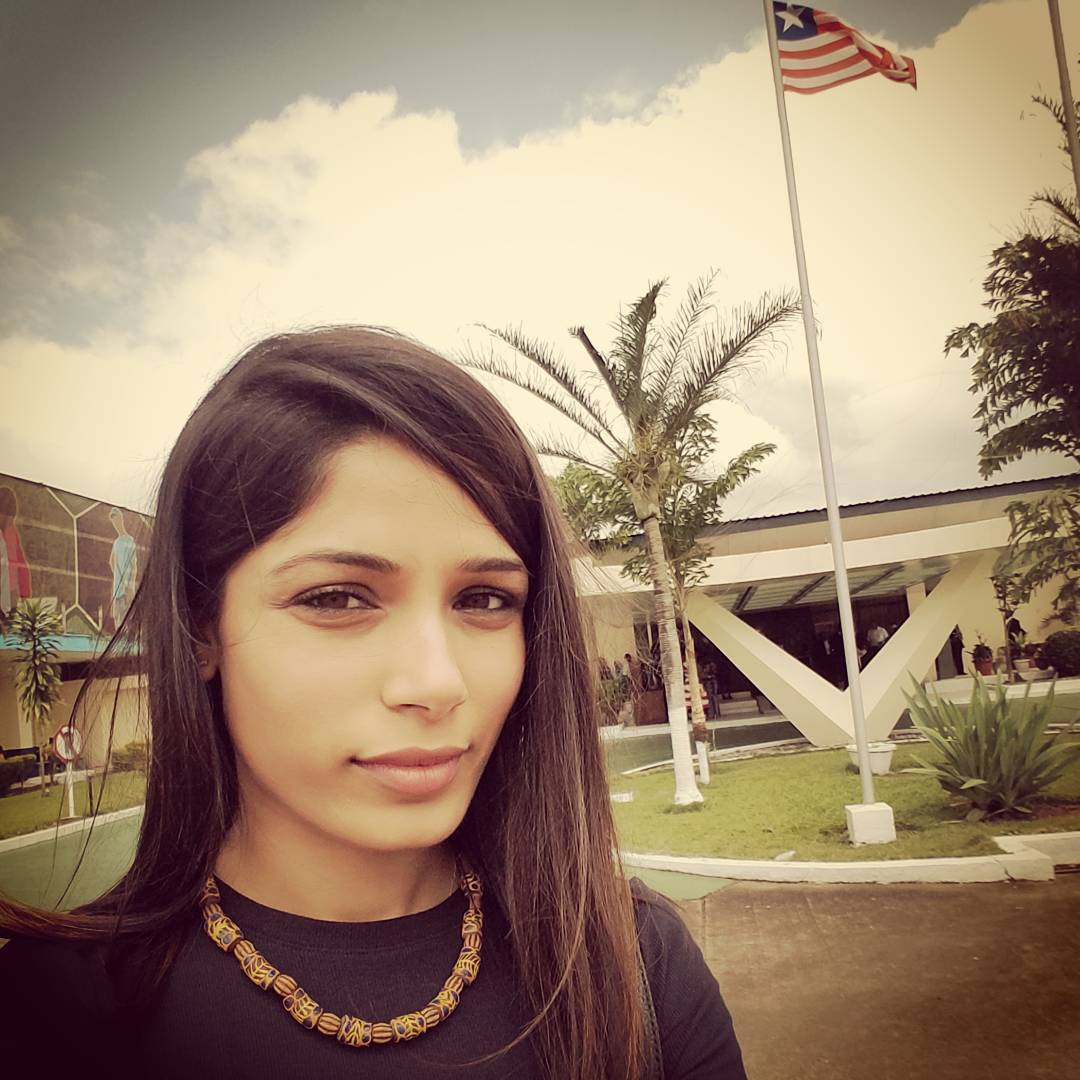
Freida Pinto
Freida Pinto is not only an Indian actress and professional dancer – she
also has a bachelor’s degree in arts and English literature. It seems
that she can do everything!

Nation set to pay homage to language martyrs
The nation is set to observe the ‘Shaheed Dibash’ (Language Martyrs Day) and the International Mother Language Day on Friday with extensive programmes.
People from all walks of life will pay glowing tributes to the memories of language movement martyrs, the valiant sons of the soil who made supreme sacrifices to establish the rights of the mother tongue, Bangla, in 1952.
The day will also be observed around the world as the UNESCO recognised the 21 February as the International Mother Language Day on November 17, 1999.
The government has already taken extensive programmes to observe the ‘Shaheed Dibash’ and the International Mother Language Day on February 21 in a befitting manner.
The day is a public holiday.
In observance of the day in a befitting manner, the Central Shaheed Minar premises is being decorated with paintings, graffiti, buntings and selected verses on the mother language.
Four-tier security will be enforced around the main altar of the Shaheed Minar, its adjoining areas and Azimpur graveyard of the language martyrs.
President Abdul Hamid and Prime Minister Sheikh Hasina will lead the nation by paying homage to the Language Movement heroes by placing wreaths at the Central Shaheed Minar at one minute past zero hours.
The President and the Prime Minister issued separate messages on the eve of the day, paying glowing tributes to the martyrs of the historic Language Movement of 1952.
Different political-social-cultural-professional organisations will arrange various programmes, including seminars and cultural functions, to observe the Amar (immortal) Ekushey and International Mother Language Day in a befitting manner.
Quran Khwani and offering Fateha will be held at Azimpur graveyard in the city while prayers will be arranged at all worship places across the country seeking salvation of the departed souls of the martyrs of the Language Movement.
The programmes include placing of wreaths at the central Shaheed Minar at one-minute past zero hours (Thursday midnight), hoisting at half-mast the national and party flags at its offices across the country and Bangabandhu Bhaban and hoisting black flags in the morning, wearing black badges and placing wreaths on the graves of martyrs at Azimpur graveyard with Provat Feri as a mark of respect to the Language Movement martyrs.
In observance of the day, ruling Awami League would take a two-day programme.
The party will organise a discussion at Bangabandhu International Conference Centre in the city at 3 pm on February 22.
Awami League President and Prime Minister Sheikh Hasina is expected to chair the discussion.
Like previous years, Dhaka University (DU) authorities will organise the programmes at the Central Shaheed Minar in coordination with other relevant agencies.
National dailies will publish special supplements marking the day and Bangladesh Betar and Bangladesh Television and private radio stations and television channels will air special programmes on the occasion.
On February 21 in 1952, Salam, Rafique, Shafique, Jabbar and Barkat embraced martyrdom in police firing in front of the Dhaka Medical College and Hospital (DMCH) as they took to the street to intensify the campaign to establish Bangla as the state language of the then Pakistan, sowing the seeds of subsequent movements for the country’s independence.
They were killed as police opened fire on students, demonstrating under the All-Party Students Action Committee against conspiracies of Pakistani rulers to declare “Urdu” as the only state language.
The movement for Bangla, however, did not stop and Pakistan government on February 29, 1956 was compelled to recognise Bangla as one of the state languages besides Urdu.
The decision, however, could not stop the movement against repression and misrule of Pakistani government and subsequently led to the War of Independence and ultimately the emergence of Bangladesh.
Education is the backbone of the nation
We all know that education is the backbone of a nation. We all know that education is the backbone of a nation. Every nation must have to be educated; otherwise they will not be able to thrive as a nation. Education removes dark effects of illiteracy from a man. An educated person knows about his rights and responsibilities. To thrive as a social animal, every human needs to work. Without works, no one can earn their livelihood. Education enlightens man’s mind and improves their hidden skills. So, education supplies skillful persons and skillful persons are precious assets for a country. Thus, everybody should get proper education to build their bright career.
A beautifull sun-set
The sunset is the most beautiful time of the day. It announces the end of the day and the beginning of a night. If the sky at that time is cloudless, it presents unique scene. The scene looks most charming from the bank of a river, the sea-beach or from an elevated place like a hell. The hole earth and sky painted with crimson colour. The beauty of the sinking sun playing hide and seek in the waters of the sea can better be enjoyed than described. Then the sun looks like a dish of gold. Gradually darkness covers the whole world. Nature becomes calm and quite as it deeply absorbed in prayer of almighty Allah.
Leap Day 2024: History, significance and some interesting facts of Feb 29
Leap years are years where an extra day is added to the end of the shortest month, February. This so-called intercalary day, February 29, is commonly referred to as leap day.
Leap years have 366 days instead of the usual 365 days and occur almost every four years.
An extra day added to the Gregorian calendar about every four years is called Leap Day. It was first started in 46 BCE as Earth takes more than 365 days to revolve around the Sun and the Julian calendar did not provide any extra day for this.
This addition leads to shifting each session by a quarter of a day. This was the problem with Julian's calendar as it caused seasons to begin 44 minutes earlier every year.
Who Invented Leap Years?
Leap years in the western calendar were first introduced over 2000 years ago by Roman general Julius Caesar. The Julian calendar, which was named after him, had only one rule: any year evenly divisible by four would be a leap year.
This formula produced too many leap years, causing the Julian calendar to drift apart from the tropical year at a rate of 1 day per 128 years. This was not corrected until the introduction of the Gregorian calendar more than 1500 years later, when a number of days were skipped to realign our calendar with the seasons.
Leap Months
The ancient Roman Calendar added an extra month every few years to stay in sync with the seasons, similar to the Chinese leap month.
Nearly every four years, we add an extra day to the calendar in the form of February 29, also known as Leap Day. Put simply, these additional 24 hours are built into the calendar to ensure that it stays in line with the Earth’s movement around the Sun. While the modern calendar contains 365 days, the actual time it takes for Earth to orbit its star is slightly longer—roughly 365.2421 days. The difference might seem negligible, but over decades and centuries that missing quarter of a day per year can add up. To ensure consistency with the true astronomical year, it is necessary to periodically add in an extra day to make up the lost time and get the calendar back in synch with the heavens.
1. Many ancient calendars had entire leap months
Many calendars, including the Hebrew, Chinese and Buddhist calendars, are lunisolar, meaning their dates indicate the position of the Moon as well as the position of Earth relative to the sun. Since there is a natural gap of roughly 11 days between a year as measured by lunar cycles and one measured by the Earth's orbit, such calendars periodically require the addition of extra months, known as intercalary or interstitial months, to keep them on track.
Intercalary months, however, were not necessarily regular. Historians are still unclear as to how the early Romans kept track of their years, mostly because the Romans themselves may not have been entirely sure. It appears that the early Roman calendar consisted of ten months plus an ill-defined winter period, the varying length of which caused the calendar to become unpegged from the solar year. Eventually, this uncertain stretch of time was replaced by the new months of January and February, but the situation remained complicated. They employed a 23-day intercalary month known as Mercedonius to account for the difference between their year and the solar year, inserting it not between months but within the month of February for reasons that may have been related to lunar cycles.
To make matters even more confusing, the decision of when to hold Mercedonius often fell to the consuls, who used their ability to shorten or extend the year to their own political ends. As a result, by the time of Julius Caesar, the Roman year and the solar year were thoroughly out of sync.
2. Julius Caesar introduced Leap Day, with help from the Egyptians...
The Mercedonius-when-we-feel-like-it system apparently irked Caesar, the general-turned-consul-turned-dictator of Rome who drastically altered the course of European history. In addition to conquering Gaul and transforming Rome from a republic into an empire, Caesar re-ordered the Roman calendar, giving us the blueprint off of which much of the world still operates to this day.
During his time in Egypt, Caesar became convinced of the superiority of the Egyptian solar calendar, which featured 365 days and an occasional intercalary month which was inserted when astronomers observed the correct conditions in the stars. Caesar and the philosopher Sosigenes of Alexandria made one important modification: instead of relying on the stars, they would simply add a day to every fourth year. In keeping with the Roman tradition of messing with the length of February, that day would fall in the second month of the year—thus Leap Day was born. Caesar added two extra-long months to the year 46 BCE to make up for missed intercalations, and the Julian Calendar took effect on January 1st, 45 BCE.
3. ...but their math was a little off
By the 16th century, scholars had noticed that time was still slipping—Caesar's calculation that a year lasted 365.25 days was close, but still overestimated the solar year by 11 minutes. This was a problem for the Catholic Church, as the date of Easter had drifted away from its traditional place, the first Sunday after the first full moon following the vernal equinox, by roughly ten days. Pope Gregory XIII commissioned a modified calendar, one which kept Leap Day but accounted for the inaccuracy by eliminating it on centurial years not divisible by 400 (1700, 1800, and 1900 were not leap years, but 2000 was). The introduction of the Gregorian Calendar marked the last change to the Western calendar as we know it today.
Experts note that the Gregorian calculation of a solar year—365.2425 days—is still not perfect, and thus another correction will be necessary. Thankfully, the Gregorian calendar is only off by about one day every 3,030 years, so mankind has some time before this becomes a problem.
4. Leap Day is often associated with marriage, proposals and flipping gender roles
Curiously, many Leap Day customs have revolved around romance and marriage. Tradition holds that in 5th-century Ireland, St. Bridget lamented to St. Patrick that women were not allowed to propose marriage to men. So legend has it that St. Patrick designated the only day that does not occur annually, February 29, as a day on which women would be allowed to propose to men. In some places, Leap Day thus became known as Bachelor's Day.
This tradition hopped the Irish Sea to Scotland and England, where the British added a twist—if a man rejected a woman's proposal, he owed her a debt of several pairs of fine gloves, perhaps to hide the fact that she did not have an engagement ring. In Greek tradition, however, it is considered bad luck to marry on Leap Day, and statistics suggest that Greek couples continue to take this superstition seriously.
5. People born on Leap Day are called 'Leaplings'
There are only about 5 million people in the whole world who were born on February 29, with the odds of being born on Leap Day standing at about 1-in-1,461. Several famous people—including actress and singer Dinah Shore (born 1916), motivational speaker Tony Robbins (born 1960) and hip-hop artist Ja Rule (born 1976)—are leaplings. Leaplings technically only get to celebrate their birthdays once every four years, but they do get to be part of an elite group.
Nation set to pay homage to language martyrs
and the International Mother Language Day on Friday with extensive programmes.
People from all walks of life will pay glowing tributes to the memories of language movement martyrs, the valiant sons of the soil who made supreme sacrifices to establish the rights of the mother tongue, Bangla, in 1952.
The day will also be observed around the world as the UNESCO recognised the 21 February as the International Mother Language Day on November 17, 1999.
The government has already taken extensive programmes to observe the ‘Shaheed Dibash’ and the International Mother Language Day on February 21 in a befitting manner.
The day is a public holiday.
In observance of the day in a befitting manner, the Central Shaheed Minar premises is being decorated with paintings, graffiti, buntings and selected verses on the mother language.
Valentine's Day
Valen
tine's Day is celebrated on 14th February every year across the world. Largely a Western tradition, the day is now celebrated in a major way in the eastern part of the world as well in countries like India and China. The day is named after a Christian martyr Saint Valentine and is celebrated to commemorate the love between companions.
The day is believed to have been first incorporated by Pope Gelasius I in 496 AD. There were numerous martyrs named Valentine in the early years who were martyred for several reasons. However, none of them were associated with love. It was in the 14th century that a Valentine was associated with love and it is believed that the tradition of Valentine's Day started with that particular Valentine.
However, there are several other theories as to the origins of Valentine's Day. Some believe that the day was celebrated to respect a Saint Valentine when he refused to obey the orders of Emperor Claudius II. Emperor Claudius II had ordered that young men should refrain from marrying, as he believed that after marriage, men no longer remain good soldiers. However, the Valentine in question did not obey this order and helped many young men marry secretly. The Valentine was thus killed by the Emperor and hence, the tradition of Valentine's Day was started.
The day is predominantly celebrated in Western countries but is beginning to make its presence in other countries as well. On this day, lovers exchange gifts and cards to profess their love for each other while single men and women go out in find of their valentine. Several clubs and discs organize special nights on this day which is accompanied by thumping music, candle light dinners and other romantic settings.
six seasons
There are six seasons in Bangladesh. Each season has its special feature. Dew drops fall at night during in winter. The spring is the king...
-
১।সর্ষে ইলিশ উপকরনঃ কাঁচা মরিচ, সরিষার পেস্ট, রাঁধুনি হলুদ গুড়া , লবন। প্রনালিঃ একটি বাটি নিন , তাতে মাছের সঙ্গে হলুদ , লবন মি...
-
ভালোবাসার ফুল গোলাপ। এটি ভালোবাসার ভাষা বুঝতে ও বোঝাতে পারে। তাই উপহার হিসেবে গোলাপেরই চাহিদা এখন সবার উপরে। লাল গোলাপ প্রেমের কবিতা আর গল...
-
Flower is a very valuable gifts of Allah. All of us are fond of flowers. Flowers are used for various purposes. Flowers are Spreads of vari...


26 March is Our Independent Day.